A British 3-inch field piece in action. A well-trained crew could fire as many as 20 rounds per minute.
A 3-inch field piece in actionReverse:This type of light field artillery is being used so successfully in Europe today to fire shrapnel and high explosive shells. The shield of armor plate which protects the men are all tested with a regulation rifle bullet shot at 100 yards before they are placed on the gun. The gun is operated by five men, each of whom has special duties. The shell is taken from the caisson or ammunition chest, which is at the left of the gun, the fuses set and the shell put into the gun and the breach closed ready for firing. With an efficient gun crew, twenty of these shots can be fired in a minute.No. 22 Published by American Colortype Co., ChicagoPhoto © Underwood & Underwood
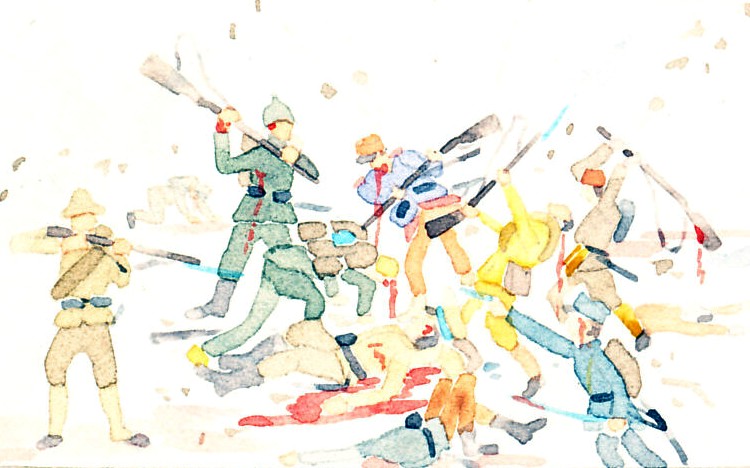
"Then hell broke loose. With a mighty, hideous, screeching burst of noise, hundreds of guns spoke. The men in the front trenches were deafened by the sharp reports of the field guns spitting out their shells at close range to cut through the Germans' barbed wire entanglements. In some cases the trajectory of those vicious missiles were so flat that they passed only a few feet above the British trenches. . . .. . . The Lincolns, against desperate resistance, eventually occupied their section of the trench and then waited for the Irishmen and the Rifle Brigade to come and take the village ahead of them. Meanwhile the second Thirty-ninth Garhwalis on the right had taken their trenches with a rush and were away towards the village and the Biez Wood. . . .There was bloody work in the village of Neuve Chapelle. The capture of a place at the bayonet point is generally a grim business, in which instant, unconditional surrender is the only means by which bloodshed, a deal of bloodshed, can be prevented."
From an account by 'an eye witness' quoted at length in History of the World War by Francis A. March. The Battle of Neuve Chapelle began with a thirty-five minute bombardment of the German defenses at 7:30 AM on March 10, 1915. By 10:00 AM the British and Indian forces in the center had reached their day's objective, breaking through the German line to see open country before them. They waited for orders, which, when they came, told them to advance no further as there had been problems on either flank. On the left, the British had not fielded adequate artillery, and suffered heavy losses. On the right flank, the Gharwali Rifles had mistakenly turned to their right after leaving their trenches, and attacked — not the dazed and shocked troops they expected — but well-entrenched German defenders who had not been subject to any bombardment.
History of the World War; An Authentic Narrative of the World's Greatest War by Francis A. March, pp. 270, 271, copyright © 1918 Francis A. March, publisher: The United Publishers of the United States and Canada, publication date: 1919
Neuve Chapelle, bayonet, blood, 1915-03-10, March, 1915, artillery